The best keynote speakers in Australia for corporate events are those whose expertise, experience and delivery style match your audience, event objective and format.
If you’re comparing the best keynote speakers Australia can offer, finding names isn’t usually the difficult part. The challenge is deciding who will genuinely suit the people in the room and what you want them to take from the session.
A technology conference may need someone who can make sense of AI and disruption. A leadership summit might call for hard-earned insight into pressure, change or decision-making. A sales conference could benefit more from a specialist in customer behaviour than a famous name whose story has little connection to the event objective.
This guide compares Australian speakers currently featured by Onstage Entertainment for speaker enquiries, organised around what you want the session to achieve.
If you already have an event brief, explore our keynote speakers or use the comparisons below to narrow your options.
Compare the Best Keynote Speakers in Australia
A recognisable name can draw attention, but profile alone shouldn’t determine the booking. Start with what you want the audience to take away, then use this comparison to identify speakers worth exploring in more detail.
| Speaker | Best For | Key Themes |
|---|---|---|
| Future Crunch | Technology and strategy conferences | AI, innovation, adaptability, future of work |
| Amanda Stevens | Sales and customer-focused events | Customer experience, consumer behaviour, loyalty |
| Chris Helder | Sales, leadership and company conferences | Communication, mindset, influence, change |
| Li Cunxin AO | Leadership and executive events | Leadership, determination, change, excellence |
| Turia Pitt | Leadership, culture and wellbeing events | Resilience, confidence, adversity |
| Brant Garvey | Leadership and performance events | Resilience, adaptability, performance |
| Dr Lauren Burns OAM | Wellbeing and performance programmes | Wellbeing, mindset, sustainable performance |
| Anna Meares OAM | Leadership and major conferences | Performance, pressure, strategy, leadership |
| Kurt Fearnley AO | Leadership and inclusion events | Resilience, inclusion, community, performance |
Use the table to identify two or three likely matches, then compare their credentials, subject matter and event fit below.
If you’re still working out the role a keynote should play in your programme, our guide to what a keynote speaker is covers that separately.
Innovation, AI and the Future of Work
Technology-focused keynote speakers work best when they can translate complex change into something useful for the people in the room. For conferences exploring AI, innovation or workplace transformation, that means combining credible expertise with a clear view of what organisations should prepare for next.
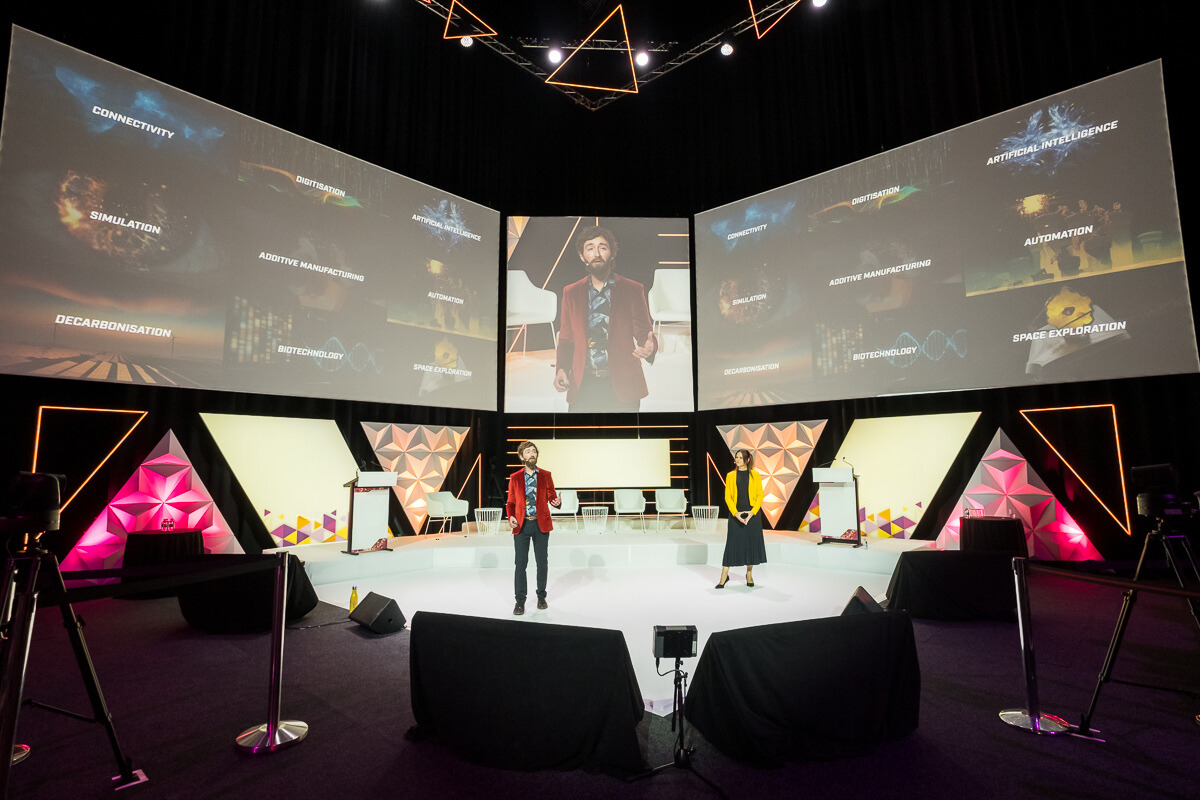
Future Crunch
Future Crunch is a science and technology research company focused on the forces reshaping business and society.
Its current keynote work examines human capability in the age of AI, adaptive intelligence and the rapidly changing global economy. Tāne Hunter’s background includes applying machine learning to DNA and cancer research, as well as prediction modelling for weather and climate.
That technical grounding creates a different proposition from a broad trends presentation. Future Crunch can help an audience consider not just which technologies are emerging, but how people and organisations need to adapt as those technologies develop.
Best suited to: technology conferences, executive strategy days, leadership forums and organisations working through AI adoption, disruption or rapid change.
Business, Customers and Commercial Performance
For commercially focused conferences, the strongest speaker is often someone whose expertise connects directly to the business problem being discussed. Customer experience, sales performance and changing consumer behaviour can justify a more specialised speaker rather than a broad motivational keynote.
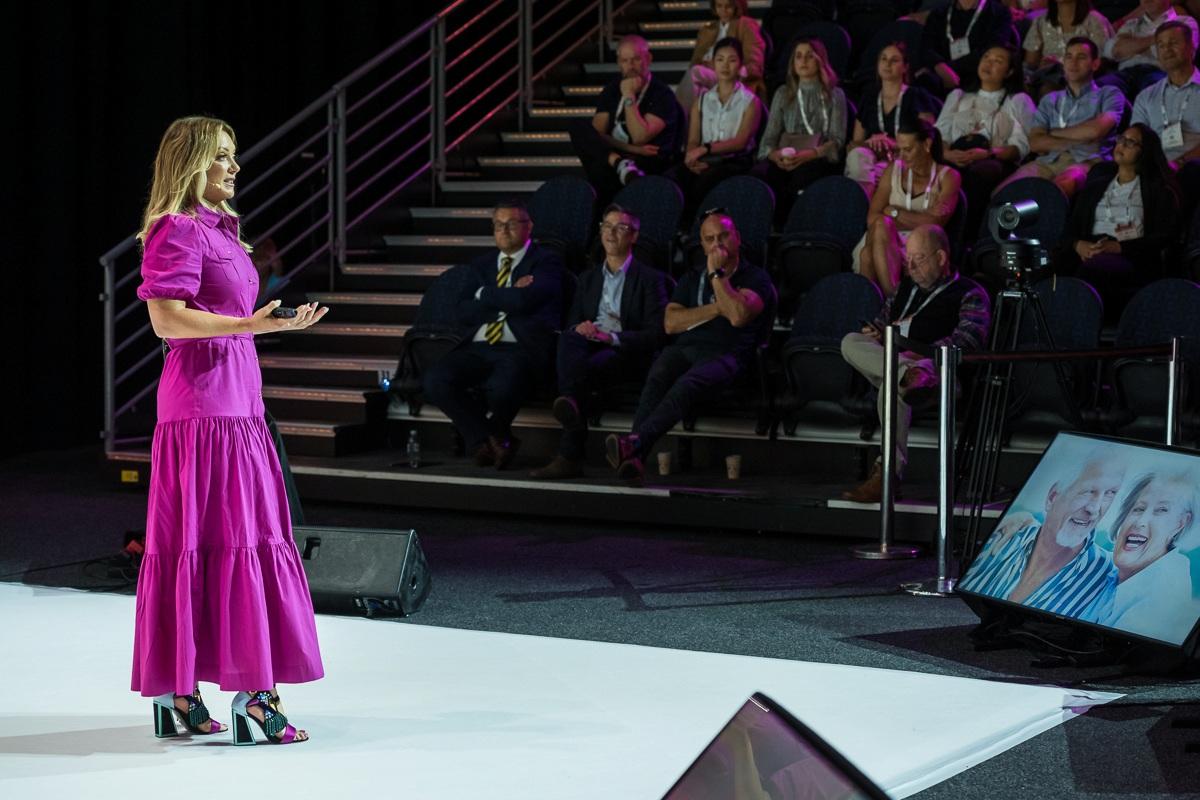
Amanda Stevens
Amanda Stevens specialises in consumer behaviour and customer experience, making her particularly relevant when the conference objective has a clear commercial connection.
She has delivered more than 1,700 presentations across 17 countries, with current material focused on customer experience, consumer trends and creating stronger customer advocacy. Her approach includes researching the industry and developing customised content for the audience.
For an organiser, the appeal is specificity. If the brief is about improving customer loyalty, service or the way employees think about the customer journey, her expertise connects directly to that objective.
Best suited to: sales conferences, retail, financial services, franchise groups, marketing events and organisations with large customer-facing teams.
Communication, Mindset and Workplace Performance
Communication-focused speakers can be particularly valuable when the objective is to change how people interact, influence and respond to pressure. The strongest sessions give audiences practical ideas they can apply once they return to work.
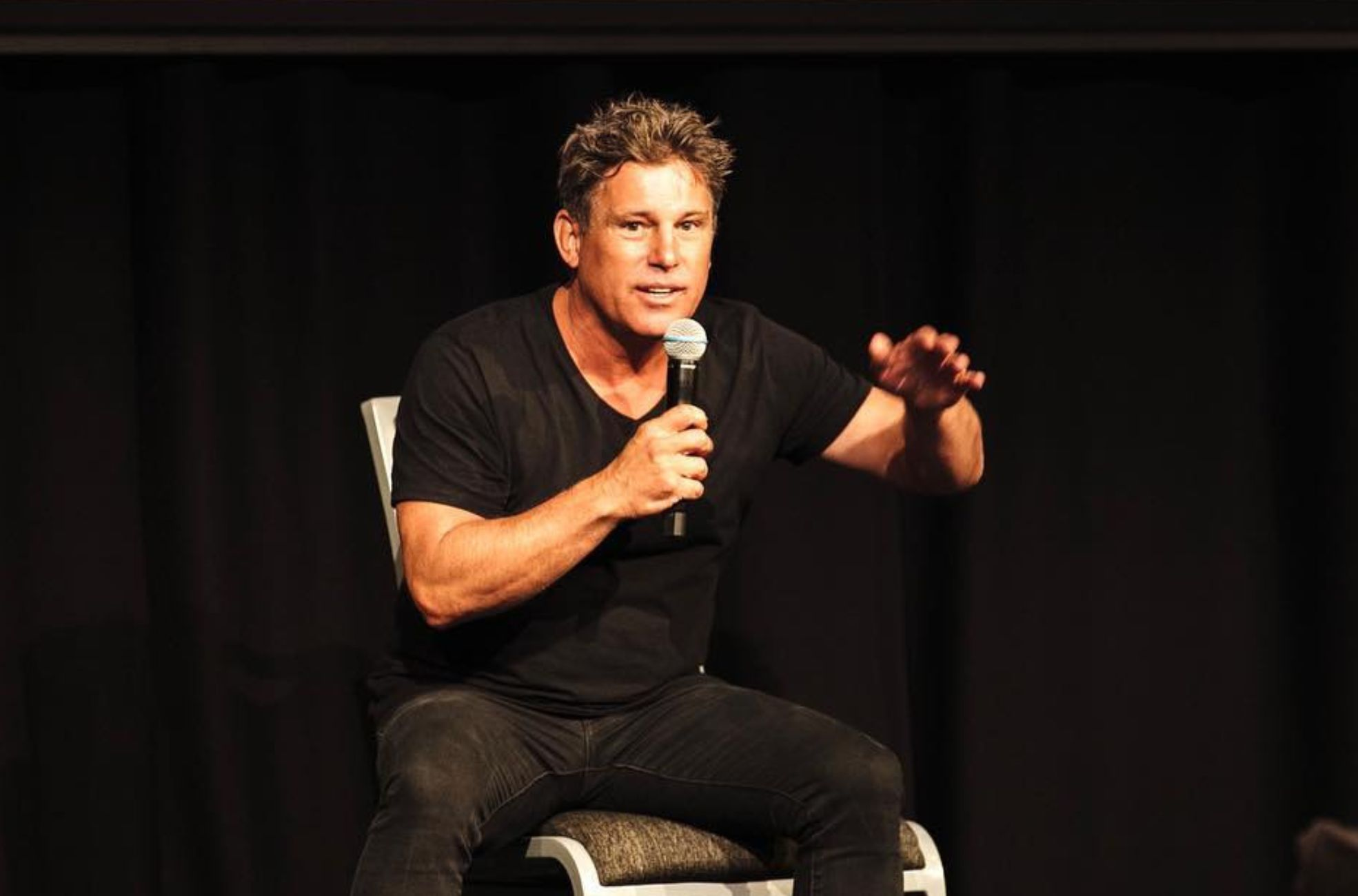
Chris Helder
Chris Helder combines a high-energy presentation style with practical frameworks around mindset, communication and human connection.
He has delivered more than 2,500 presentations globally and is best known for his Useful Belief approach. Instead of relying on positive thinking, the framework asks people to reframe difficult situations around a belief that helps them respond more effectively.
His material also explores personality styles, rapport, trust and communication. That gives audiences frameworks they can take back into sales, leadership and workplace interactions rather than relying on motivation that disappears after the conference.
Best suited to: sales conferences, leadership events, customer-facing teams, company-wide conferences and organisations navigating change.
Leadership, Determination and Organisational Change
Leadership events often need more than management theory. Speakers with experience of sustained performance, difficult transitions and organisational responsibility can bring those themes to life in ways that feel relevant beyond the stage.
Li Cunxin AO
Many audiences will recognise Li Cunxin AO through his memoir Mao’s Last Dancer, but his career extends well beyond the story depicted in the book and film.
Li became a principal dancer with Houston Ballet and The Australian Ballet before moving into finance. He later served as Artistic Director of Queensland Ballet and received the Prix de Lausanne Lifetime Achievement Award in 2025.
That career gives organisers several credible themes to work with, including discipline, leadership, cultural change, courage and sustained excellence.
He can be particularly effective with senior audiences because his experience spans personal adversity, elite performance, career reinvention and organisational leadership.
Best suited to: leadership conferences, executive events, professional associations and organisations going through significant change.
Resilience and Performing Through Adversity
Plenty of speakers talk about resilience, but organisers should look beyond the label. The real question is whether the speaker’s experience and message connect naturally with the challenges facing the audience.
Turia Pitt
Turia Pitt brings a perspective on resilience shaped by an extraordinary personal experience.
In 2011, while competing in a 100 km ultramarathon, Turia was caught in a grassfire and suffered burns to 65 per cent of her body. She has since built a career as an author, coach and speaker focused on confidence, resilience and responding to difficult circumstances.
For corporate organisers, the value isn’t simply the severity of what she survived. Her experience provides a credible platform for discussing what happens when circumstances change and the original plan is no longer available.
Her current speaking offering also allows for customised presentations, which can be useful when resilience needs to connect closely with a particular organisational challenge or audience.
Best suited to: corporate conferences, leadership events, workplace wellbeing programmes and organisations dealing with uncertainty or significant change.
Brant Garvey
Brant Garvey approaches resilience through the lens of adaptability, performance and persistence.
Born with a right above-knee limb deficiency, Brant represented Australia in paratriathlon at the Rio 2016 Paralympic Games. He also became the first Australian above-knee amputee to complete an Ironman Triathlon.
His experience gives him a practical way into conversations about setbacks, changing circumstances and continuing to perform when the original plan fails.
That can translate particularly well into workplaces where resilience needs to feel practical rather than abstract.
Best suited to: leadership summits, strategy days, sales teams, resources and industrial organisations, and teams operating in demanding environments.
Wellbeing, Mindset and Sustainable Performance
Workplace wellbeing sessions are most useful when they connect personal health and mindset with the realities of sustained professional performance. For corporate audiences, that means moving beyond generic wellness advice into practical behaviours people can use.
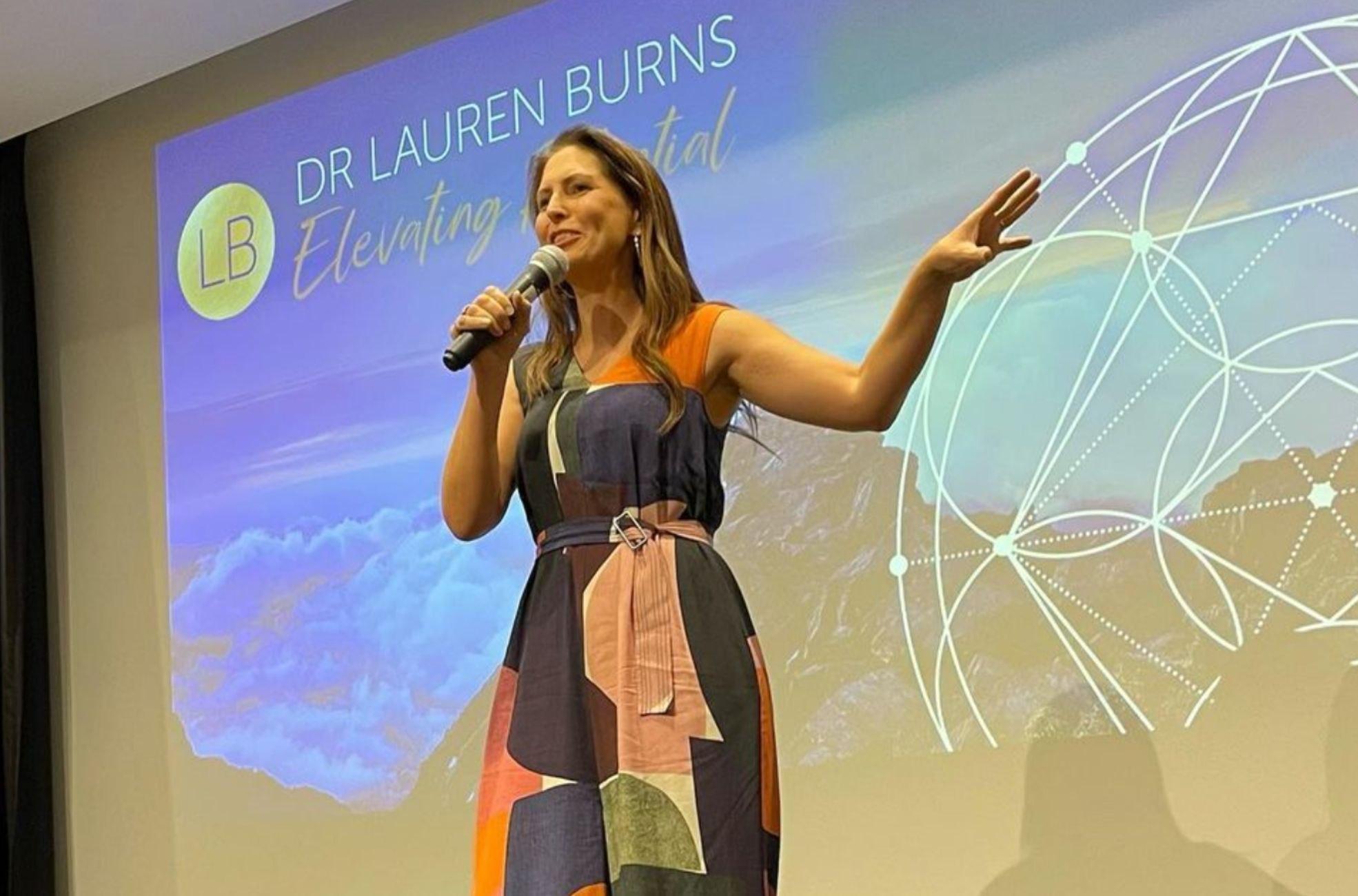
Dr Lauren Burns OAM
Dr Lauren Burns OAM combines elite sport, academic research and leadership experience in Australian high-performance sport.
Lauren created sporting history at Sydney 2000 by winning Australia’s first Olympic gold medal in taekwondo. She later completed a PhD focused on athlete lifestyle and mindset and, in 2025, was appointed Chair of the Victorian Institute of Sport.
Her speaking work brings together wellbeing, lifestyle and mindset, strategic planning, goal setting, relationships and sustainable performance.
That gives organisers an alternative to a conventional sporting keynote. The Olympic achievement provides performance credibility, while her research and wellbeing work allow the discussion to focus on behaviours that support people over time.
Best suited to: workplace wellbeing programmes, leadership development, employee conferences and organisations interested in sustainable high performance.
Sport, Leadership and Elite Performance
Sporting achievement alone doesn’t guarantee a strong corporate keynote. The connection becomes more useful when the speaker can translate preparation, pressure, setbacks and performance into lessons that make sense outside sport.
Anna Meares OAM
Anna Meares OAM combines one of Australia’s strongest elite-sport records with substantial leadership experience after retiring from competition.
Across four Olympic Games, Anna won six medals, including gold at Athens 2004 and London 2012. Her Beijing 2008 silver medal came only months after a race crash left her with a broken neck.
She later served as Chef de Mission of the Australian Olympic Team for Paris 2024 and has been reappointed to lead the team at Los Angeles 2028.
Her corporate material covers leadership, resilience, marginal gains, strategy, the psychology of success and performance under pressure.
For corporate audiences, that creates a useful bridge between sporting achievement and the realities of leading people, preparing well and performing when expectations are high.
Best suited to: major conferences, leadership events, high-performance teams, strategy programmes and events focused on women in leadership.
Kurt Fearnley AO
Kurt Fearnley AO represented Australia at five Paralympic Games and won 13 medals, including three gold. His career also included major international wheelchair marathons and Commonwealth Games success.
His influence extends beyond racing. Kurt has become a prominent advocate for disability rights and inclusion and remains involved with Brisbane 2032 through its Athletes and Sport Advisory Group.
That breadth allows a corporate session to move beyond a conventional sporting success story into questions about leadership, access, opportunity, representation and the environments organisations create for people.
Best suited to: leadership conferences, professional associations, company-wide events and programmes focused on resilience, inclusion or social impact.
How to Narrow Your Keynote Speaker Shortlist
By this point, two or three speakers may stand out as possible matches. In practice, a shortlist of two or three well-matched speakers is usually more useful than comparing a long list of recognisable names.
Before enquiring, compare those options against the actual event brief rather than deciding on profile or reputation alone.
A useful test is: why this speaker, for this audience, at this event? If the answer relies mainly on fame, the fit probably needs more thought.
Consider:
- Event Objective: What should people understand, feel or do differently afterwards?
- Audience: Consider industry, seniority, professional background and why they’re attending.
- Subject Matter: Does the speaker have credible experience in the issue you want addressed?
- Tone: Do you need analytical, practical, humorous, emotional or high-energy delivery?
- Conference Theme: Will the keynote strengthen the wider programme?
- Format: Is this a keynote, Q&A, fireside chat, workshop or combination?
- Budget: Compare the complete booking requirement rather than the headline speaker fee alone.
- Availability: High-demand speakers can be committed well ahead of major corporate dates.
- Presentation Length: Confirm that the speaker’s format works within your run sheet.
- Customisation: Establish how the material can be adapted to your organisation, audience and theme.
For a more detailed selection process, use our guide to the questions to ask when booking a guest speaker.
Finding the Best Keynote Speaker for Your Event
The best keynote speakers Australia has available aren’t automatically the people with the biggest public profiles. The right choice is the speaker whose expertise, experience and delivery fit your audience, objectives and wider event programme.
Start with what you want the session to achieve. From there, narrow the options by subject matter, audience fit, presentation style, format, budget and availability.
If you’re planning a conference or corporate event, send Onstage Entertainment your event type, date, location, audience, objectives, preferred subjects and approximate budget. If you already have a few keynote speaker ideas, include those too.
We can use that brief to recommend suitable keynote speakers, compare the options with your requirements, check availability and assist with the booking process.
If the keynote forms part of a wider programme, we can also help coordinate your corporate event entertainment around the conference format.
Frequently Asked Questions About Keynote Speakers
How Far in Advance Should You Book a Keynote Speaker?
Begin speaker enquiries once your event date and location are reasonably secure. For major conferences and complex corporate events, planning six to twelve months ahead gives you more options. Securing speakers around three to six months before an event may still be possible, but larger programmes, popular speakers and high-demand dates often require earlier planning.
Interstate travel and more complex presentation requirements can also increase the lead time.
How Much Does a Keynote Speaker Cost in Australia?
Pricing depends on the speaker’s profile, demand, event location, presentation requirements and format. Flights, accommodation, ground transport and other agreed expenses may also affect the total booking cost.
Set an approximate budget before requesting recommendations. It helps rule out unsuitable options early and makes it easier to identify realistic alternatives.
Can Keynote Speakers Customise Their Presentation?
Many speakers can tailor elements of their presentation, although the level of customisation varies. This might include adjusting examples, case studies, audience references or key takeaways after a briefing with the organiser. Some speakers also offer workshops, panels or facilitated Q&A sessions alongside their keynote.
If customisation is essential, confirm what is included before finalising the booking.
How Long Does a Keynote Speech Usually Last?
Many corporate keynote presentations run for approximately 30 to 60 minutes, although the right length depends on the speaker, subject and programme. Avoid choosing an arbitrary session length before discussing the format. Some presentations work best at a particular duration, especially where the speaker uses video, audience interaction or structured frameworks.
Allow separate time for questions if Q&A forms part of the programme.
Can a Keynote Speaker Also Take Part in a Panel or Q&A?
Often, yes, but additional appearances should be discussed when the booking is arranged. A speaker may be able to deliver a keynote and then participate in a panel, moderated discussion or audience Q&A. Confirm the full scope in advance so the speaker’s preparation, timing and fee reflect everything required.
What Technical Requirements Should You Confirm With a Keynote Speaker?
Ask for the speaker’s AV and staging requirements before finalising production. Typical requirements may include a lapel or handheld microphone, presentation screen, confidence monitor, slide deck, video playback, audio feeds or a presentation clicker.
For larger conferences, also confirm rehearsal times, presentation file deadlines and who will cue the speaker on stage.